Ever worried that your dog might get too hot on a summer day? I know I have. Heat stroke in dogs is a serious condition that many owners underestimate. The good news is, with the right knowledge, it can be prevented. In this guide, I’ll walk you through everything you need to know about avoiding heat stroke in dogs, from causes and warning signs to practical prevention steps.
What is Heat Stroke in Dogs?
Let’s start with the basics. Heat stroke is when a dog’s body temperature rises dangerously high and the body can no longer regulate it. Unlike humans, dogs don’t sweat the same way we do. Instead, they mainly rely on panting to release heat. This makes them more vulnerable when the environment is hot and humid.
Key Terms You Should Know:
- Hyperthermia: A dangerously high body temperature that goes beyond normal levels.
- Heat Exhaustion: The early stage before heat stroke, where the dog shows fatigue, heavy panting, and weakness.
- Heat Stroke: The advanced and life-threatening stage where the body overheats, often leading to organ failure or even death if untreated.
Why Dogs Get Heat Stroke
Dogs are at risk of overheating faster than we think. A few main reasons include:
- Panting isn’t enough: On extremely hot or humid days, panting can’t cool the body effectively.
- Thick coats: Breeds like Cavaliers, Huskies, and Golden Retrievers can overheat quickly.
- Short muzzles: Bulldogs, Pugs, and other brachycephalic breeds struggle to breathe efficiently, which makes cooling even harder.
- Overexertion: Running or playing too hard under the sun pushes body temperature dangerously high.
- Closed environments: Cars, poorly ventilated rooms, or hot kennels act like ovens for dogs.
Warning Signs of Heat Stroke
The scary thing? Heat stroke can sneak up quickly. Here’s what I always watch for:
- Excessive, heavy panting
- Drooling more than usual
- Bright red gums and tongue
- Weakness, wobbling, or collapse
- Vomiting or diarrhea (sometimes with blood)
- Confusion or glazed eyes
- Seizures or unconsciousness in severe cases
👉 If you notice these signs, treat it as an emergency. Immediate action can save your dog’s life.
Step-by-Step: What To Do If Your Dog Shows Heat Stroke Symptoms
- Move to a cool area – Shade or indoors with air conditioning is best.
- Cool the body gradually – Use cool (not ice-cold) water on the chest, belly, and paws. Avoid freezing water because it can shock the system.
- Use airflow – A fan helps speed up the cooling process.
- Offer water – Small sips of cool water. Don’t force it.
- Call your vet right away – Even if your dog looks better, internal damage may still be happening.
How to Prevent Heat Stroke in Dogs
The golden rule: prevention is always easier than treatment.
Here are simple but powerful steps I follow:
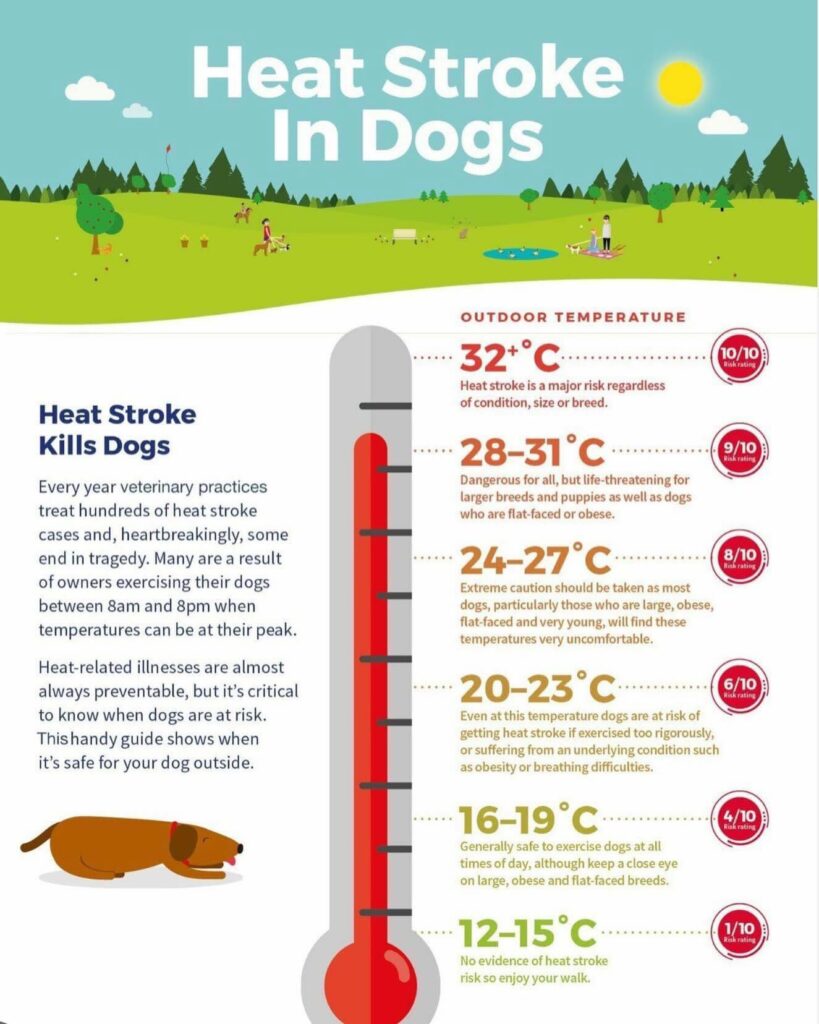
- Walk during cooler hours – Early morning or late evening.
- Carry water – Bring a collapsible bowl and fresh water during outings.
- Avoid hot surfaces – Asphalt and concrete can burn paw pads and increase body temperature.
- Never leave dogs in cars – Not even for a few minutes. A car can reach deadly temperatures in minutes.
- Provide shade and ventilation – Whether outside in the yard or inside the home.
- Groom smartly – Regular brushing to remove excess fur, but avoid shaving double-coated breeds too short.
- Know your dog’s limits – Older dogs, puppies, overweight dogs, and brachycephalic breeds are at higher risk.
Tips for Success
- Always carry a portable water bottle during summer walks.
- Use cooling mats or vests if you live in a hot climate.
- Try frozen dog-safe treats (like ice cubes with peanut butter or broth) to keep them cool.
- Set reminders for water breaks when hiking or playing outside.
Common Mistakes Owners Make
- Thinking shade is enough – Even shaded areas can get hot without proper airflow.
- Pouring ice-cold water – It shocks the body instead of cooling safely.
- Overexercising in summer – A dog that “seems fine” can still collapse from heat stress.
- Neglecting indoor heat – Dogs can overheat inside without proper ventilation.
Variations and Extra Precautions
Every dog is different. Here’s how you can adjust prevention:
- Flat-faced breeds – Avoid long walks in summer; stick to short, shaded strolls.
- Senior dogs – Keep play sessions short and always monitor closely.
- Working dogs – Schedule training early morning, and always rotate rest breaks.
- Traveling dogs – Use sunshades in the car, never let them ride in the back of a truck, and keep portable fans on hand.
Summary
Heat stroke in dogs is dangerous, fast-developing, and often overlooked. But with awareness, prevention, and quick action, you can protect your dog from this life-threatening condition. Remember to watch the signs, act fast in emergencies, and always prioritize prevention.
I know how much peace of mind it gives when you’re prepared. Heat stroke in dogs is preventable, and now you have the knowledge to keep your best friend safe all summer long.