Have you ever looked into your Cavalier King Charles Spaniel’s big, soulful eyes and worried about their vision? I’ve been there too, and one eye condition that often surprises owners is retinal dysplasia. It sounds complicated, but don’t worry—I’ll break it down in plain language so you know what it is, how it affects Cavaliers, and what you can do about it.
What Is Retinal Dysplasia?
Let’s start simple. Retinal dysplasia is an abnormal development of the retina, which is the light-sensitive tissue at the back of the eye. Think of the retina as the screen in a movie theater—it takes in images and sends them to the brain. If the screen is crumpled or torn, the movie doesn’t look right. That’s exactly what happens in retinal dysplasia.
Key Terms You Should Know
- Retina – The layer of cells at the back of the eye that captures light and sends images to the brain.
- Dysplasia – Abnormal growth or development of a tissue.
- Retinal folds – Wrinkles in the retina that distort vision.
- Retinal detachment – When the retina separates from the underlying tissue, often leading to blindness.
Types of Retinal Dysplasia in Cavaliers
Not all cases are the same. Cavaliers can experience different forms, each with its own severity.
- Focal or Multifocal Retinal Dysplasia
Small folds or clumps in the retina. Dogs may not show any symptoms, and vision can remain fairly normal. - Geographic Retinal Dysplasia
Irregular areas of the retina are malformed. This can cause blind spots in vision. - Complete Retinal Detachment
The most severe form. The retina pulls away entirely, usually leading to blindness in the affected eye.
Causes and Risk Factors
Why does this happen? In Cavaliers, retinal dysplasia is usually linked to genetics, but other factors can play a role too.
- Inherited trait – Cavaliers are predisposed to the condition.
- Infections in the womb – If the mother is exposed to canine herpesvirus or parvovirus.
- Nutritional deficiencies – Lack of vitamin A during puppy development.
- Toxin exposure – Certain chemicals can damage developing eye tissue.
Symptoms Owners Should Watch For
The tricky part? Some Cavaliers with mild retinal dysplasia show no obvious signs. Still, here are common clues:
- Bumping into objects or walls
- Trouble catching toys or treats
- Cloudy or unusual appearance of the eye
- Hesitation in low light or dark environments
- Anxiety when navigating new spaces
Tip: Regular vet eye exams are the only reliable way to catch this early.
Diagnosis: How Vets Detect It
Your vet or a veterinary ophthalmologist will typically use:
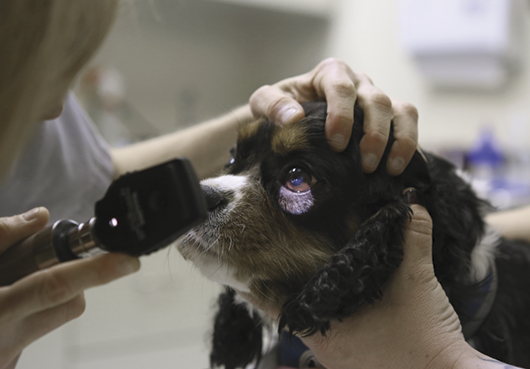
- Ophthalmoscope exam – A special light to look at the retina.
- Electroretinography (ERG) – Tests how the retina responds to light.
- Ultrasound of the eye – Helpful in cases of suspected detachment.
- Genetic testing – Available for Cavaliers to identify inherited risks.
Materials Needed (for Owners Preparing for Eye Exams)
If you’re heading to the vet for an eye check, here’s what you might need to bring:
| Material / Information Needed | Why It’s Important | Example / Notes |
|---|---|---|
| Cavalier’s full medical history | Helps the vet identify genetic links | Include vaccination history, any past illnesses |
| Breeder records (if available) | Genetic risk assessment | Ask breeder if eye conditions run in family line |
| List of observed symptoms | Helps vet focus on possible issues | Note when bumping into things started |
| Previous test results | Gives baseline for comparison | Any blood tests or imaging |
| Comfort items for your dog | Reduces stress during exams | Favorite toy, blanket, or treats |
Treatment Options
Here’s the part most owners want to know: can it be fixed?
- Mild cases (focal folds): Often no treatment is needed. Vision stays relatively normal.
- Moderate cases: Monitoring, antioxidant supplements, and avoiding breeding affected dogs.
- Severe cases (detachment): Surgery may be attempted, but success rates are low. In most cases, dogs adapt to partial or full blindness surprisingly well.
Living With a Cavalier With Retinal Dysplasia
If your pup has vision problems, life doesn’t have to be hard. Cavaliers are adaptable, and with a few adjustments, they can thrive.
- Keep furniture in the same spot.
- Use textured mats near food and water bowls.
- Avoid leaving obstacles in common walkways.
- Add night lights in darker areas of the house.
Tips for Success
- Regular checkups: Annual vet eye exams are non-negotiable.
- Choose ethical breeders: Only work with breeders who test for inherited eye conditions.
- Monitor changes: Sudden vision loss can mean something else, like progressive retinal atrophy (PRA).
- Stay patient: Cavaliers can adapt, but they’ll look to you for guidance.
Common Mistakes to Avoid
- Assuming no symptoms means no problem. (Mild cases can go unnoticed.)
- Breeding affected dogs. (This passes the condition to future litters.)
- Skipping eye exams because “the dog seems fine.”
- Rearranging furniture frequently, which confuses a vision-impaired dog.
Similar Conditions to Know
Sometimes retinal dysplasia gets confused with other eye conditions in Cavaliers. Here’s how they differ:
- Progressive Retinal Atrophy (PRA): A degenerative condition, not developmental. Slowly leads to blindness.
- Cataracts: Clouding of the lens, can be surgically treated.
- Collie Eye Anomaly (CEA): A genetic condition with similar retinal folds, but not common in Cavaliers.
Variations and Breeding Concerns
Not every case looks the same, even within the Cavalier breed:
- Some dogs may have unilateral dysplasia (one eye affected).
- Others may have bilateral dysplasia (both eyes affected).
- Severity can vary dramatically—even littermates can show different outcomes.
For breeders: Cavaliers with confirmed retinal dysplasia should not be bred, even if symptoms are mild. This is key to reducing the risk in future generations.
Final Thoughts
Retinal dysplasia in Cavaliers may sound scary, but with knowledge and proactive care, it’s a manageable condition. The best step you can take as an owner is to stay informed, schedule regular eye exams, and choose responsible breeders.
Your Cavalier’s eyes may not be perfect, but their love for you will always shine bright. And that’s what matters most.